
Current main research projects

The use of semantic prior and sensory clarity in early psychosis and chronic schizophrenia: Individuals suffering from psychosis often report cognitive deficits, including language comprehension difficulties. These cognitive symptoms precede the onset of positive symptoms and are a strong predictor for transitioning from a high-risk state into a full-blown psychosis. We are using a complex predictive language processing paradigm to investigate using a Bayesian modelling (1) whether predictive language processing is impaired across different stages of psychosis (i.e., at-risk, first episode, chronic schizophrenia) and (2) whether these linguistic predictive processing mechanisms contribute to the perception of illusions (i.e. non-clinical hallucinations). See more. Collaborators: Dr Lucy J. MacGregor, Dr Chris Mathys

Decision making in early psychosis and obsessive compulsive disorder (OCD): We are using various decision making paradigms across different sub-projects, such as the go/nogo task (Guitart-Masip, et al 2012), the two-stage task (Daw, et al, 2012), and model-free probabilistic learning tasks (similar to O’Doherty, et al., 2004) to investigate the underlying mechanisms of deficits in reward and prediction error processing in large samples of healthy subjects, individuals early psychosis, chronic schizophrenia and OCD. We are using reinforcement learning and active inference algorithms to understand behaviour and explore the relation to brain signals. Collaborators on different sub-projects: Prof Kathrin Koch, Dr Christian Sorg, Dr Michael Moutoussis, Dr Christelle Langley.
Publications: Journal of Psychiatry and Neuroscience, Brain
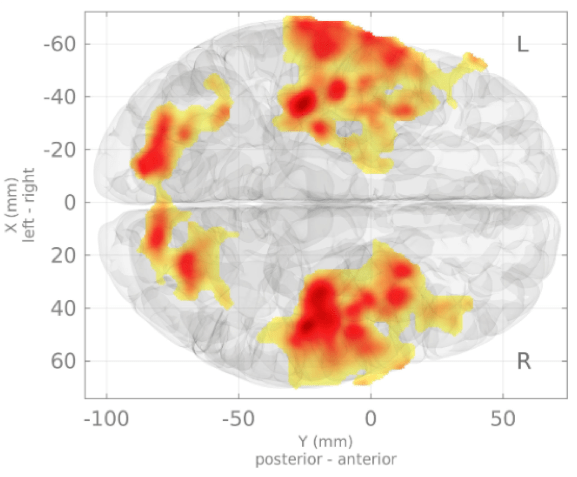
Association between glutamate, functional connectivity and schizotypy and autism: Despite many differences, autism spectrum disorder and schizophrenia spectrum disorder have common risk factors, genetic links, and neuronal abnormalities, including similar cognitive issues. These similarities are found even in subclinical traits of both disorders. Studies suggest that changes in the GABAergic inhibitory and glutamatergic excitatory systems may explain these neuronal overlaps. Research also hypothesizes that schizophrenia is linked to brain functional dysconnectivity (Friston et al., 2016b). Previous studies using 1H-MRS, and fMRI showed a positive correlation between glutamate levels and activity in distal brain regions in healthy subjects (Duncan et al., 2014; Kiemes et al., 2021). Using magnetic resonance spectroscopy and resting-state fMRI in 53 healthy participants, we investigate several questions: 1. Are glutamate levels in specific brain regions (ACC and DLPFC) related to schizotypy and/or autistic traits? 2. Can we find an association between regional glutamatergic metabolite levels and fMRI activation in healthy individuals? 3. Is this potential association also related to schizotypy and autistic traits? 4. May these findings be a potential candidate for identifying early-risk individuals prone to developing psychosis?
Publication: Scientific Reports

Investigating morphometric networks across different psychotic disorders including Early Psychosis and Parkinson’s Psychosis: In this project we investigate structural grey matter changes that occur across different psychotic disorders, namely at-risk mental state for developing psychosis, first episode psychosis and Parkinson’s disease psychosis. We investigate grey matter organisation and volume differences. We wish to understand how morphometric networks change with disease progression in psychosis from an at-risk state to a first episode, and in PD with and without psychosis. Collaborator: Prof Kathrin Koch.
Publication: npj Parkinson’s Disease

The COVID-19 Pandemic and its impact on mental health: The ongoing pandemic has created an unprecedented situation for the global population. People everywhere experience restrictions in everyday life, and consequential stressors, such as financial insecurities, dealing with loss and illness, misinformation, etc. Using a variety of different statistical approaches we are investigating the impact the COVID-19 pandemic poses on mental health, but especially psychosis, depression and anxiety disorders.
Publications: eLife, BMC Psychology, Frontiers of Psychology
 franziskaknolle.com